Home / Learn / The card fee you add by hand
Card fees, done right

The card fee you add by hand can cost more than it earns.

If you write a card fee on the invoice or key it in yourself, read this before the next one. You don’t have to take our word for any of it. Every headline below opens the real article.

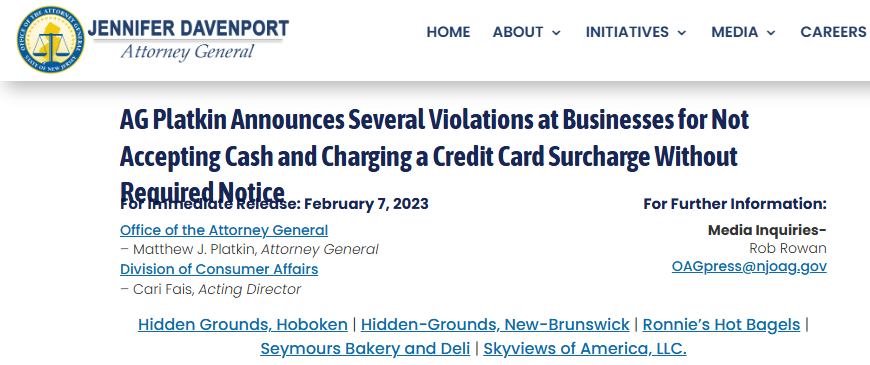
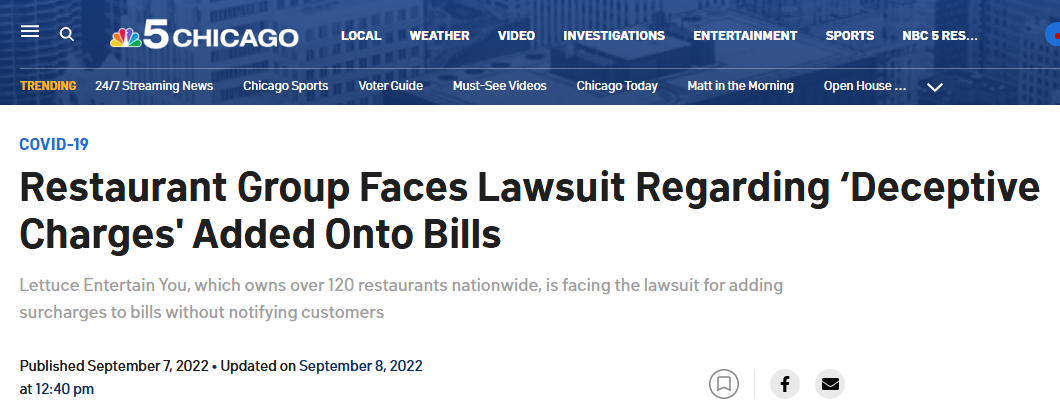
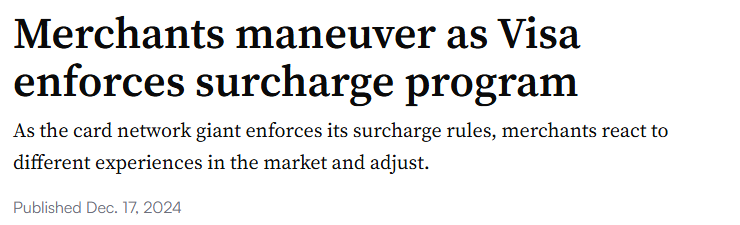
It’s already happening. Here are the headlines.

Nine stories, five states, 2022 to 2025. Tap any one to read it.

The four rules a hand-added fee misses

Visa and Mastercard publish what a card fee has to be. A fee you add yourself is on the wrong side of most of it, every time.

Visa and Mastercard say a card fee must beA hand-added fee
Registered with your processor 30 days before you startNever done
Shown to the customer before they pay, and itemized on the receiptReceipt only
On credit cards only. Never on a debit or prepaid cardEvery card
Capped. Visa set the ceiling for a surcharge at 3% in April 2023Usually over

You can’t tell a debit card from a credit card by hand, and the app you key it into never registered the fee. So a hand-added fee breaks at least two of the four brand rules every time, usually three. It doesn’t matter how long you’ve done it or how fair the number feels. Rules by state differ too: our surcharge checker has the state-by-state view.

What it costs when Visa finds one

Visa’s fine schedule, as summarized by the law firm ArentFox Schiff in July 2023. Visa’s own merchant Q&A confirms the first $1,000.

First notice$1,000
Plus a written plan to fix it, on a deadlinerequired
Deadline missed$25,000
30 days after that$50,000
60 days$75,000
90 days$100,000
Past 180 days, every month until fixed+$25,000

Visa bills the processor. The processor’s agreement passes it to you, and the account can be closed. The Wisconsin restaurant above went straight to the $25,000 tier. Enforcement is uneven, and nobody can tell you when or whether a notice comes. The exposure is real, and it is yours as long as the fee is yours.

"Visa is going straight to the merchants, using mystery shoppers, warning notices and fines." One processor said it absorbs about one surcharge fine a month on behalf of its merchants.Payments Dive, December 17, 2024 (source 3)

The risk you do not need to take

Same fee. Same phones. The only thing that changes is who carries the exposure.

Fee added by hand
Done right with AllProPay
Registered with the processor
Never. The app doesn’t know the fee exists.
Yes. We file the program before day one.
Shown before the customer pays
Written on the invoice, after the price was agreed.
On the screen and on the receipt, every time. Nothing to explain.
Debit cards
Charged the fee, against the rules.
The app handles every card type the way the rules allow.
When Visa or the state asks
It lands on you.
It is a registered, documented program with your processor.
Your card cost
2.6% to 3.5% of every sale goes to the app, out of the fee you collected.
$0. On AllPro Rebate, part of the fee comes back to you every month.
A disputed payment
You find out when the money leaves.
You call a person who knows your account, the same day it flags.
No contract No cancellation fee No setup fee Works on the phones you use now Ten minutes on the phone to apply

We set it up to your state's rules and the card-brand rules. If it is not better for you, you leave. No contract, no cancellation fee, nothing owed.

Do the math on your own numbers

Move the slider to your monthly card sales. This is the whole comparison, nothing hidden.

$

These are posted card prices, not a surcharge. A surcharge is a fee added on top of your price, and Visa caps that at 3%. Dual pricing posts both prices, cash and card, so the cap does not apply to it. We set the program up to your state’s rules and the card-brand rules.

Your card cost with us
$0
The card price covers it. Nothing comes out of your sales, at either price.
What a flat-rate app keeps today
$260 to $350
a month at a typical 2.6% to 3.5%, before the cents per swipe. Out of the fee you collected by hand. An estimate, not a quote.
Back to you on AllPro Rebate
$60 a month
about $720 a year, plus a $250 loyalty bonus
The other side of the ledger
$1,000
Visa’s first notice. $25,000 if the deadline is missed. $500 to $2,000 in the New Jersey cases above.

AllPro Rebate is paid monthly on eligible card volume processed through us at $10,000 a month and up, while you keep your posted card price. Loyalty bonus paid in two halves after months 3 and 6 as cumulative volume reaches $30,000 and $60,000. Dual Pricing and AllPro Rebate are set up to your state’s rules and the card-brand rules, and aren’t available everywhere. App figures are estimates from the number you enter, using published flat-rate pricing, not a quote for your account.

Even Square says so

Square has its own surcharge switch. Read what it allows: 3% maximum, credit cards only, in person only. Debit stays on you. A hand-written 5% on every card is outside even Square’s own tool.

So "I’ll just turn it on in the app" cuts your fee to 3%, keeps it off debit, and still leaves every invoice you key in by hand where it was.

Square Support, "Set up and manage credit card surcharges" (source 4). Square’s rules can change; the linked page has the current ones. Thinking about the switch? Our AllProPay vs Square page is the side-by-side.
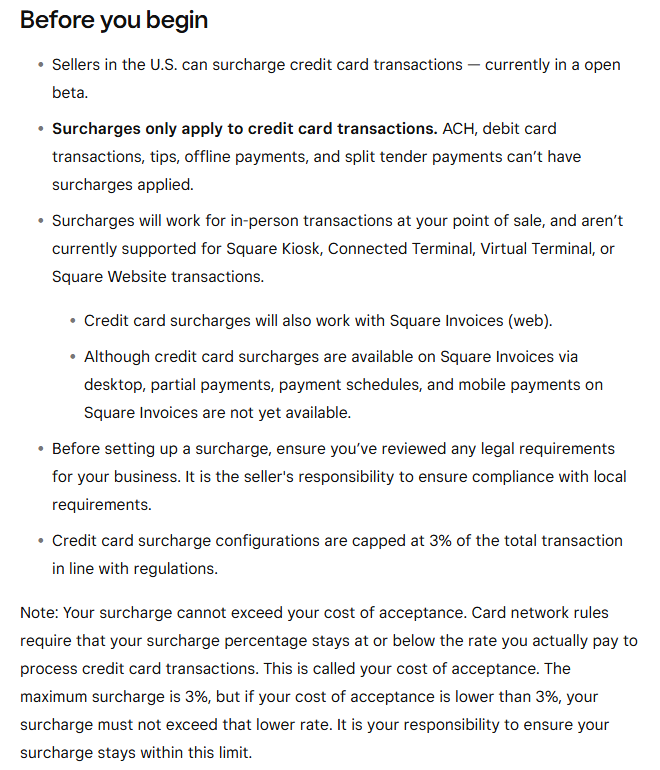
Square help page screenshot: surcharges only apply to credit card transactions and are capped at 3%

The way to do it right

Same idea, built the other way around. Your price is the card price, and cash pays less. That is dual pricing: a cash price and a card price shown side by side before anyone pays, so there is no fee on top and nothing to write in.

We set it up to your state’s rules and the card-brand rules. Where it isn’t a fit, we tell you, and interchange-plus is there instead.

Read more: surcharge vs cash discount vs dual pricing and how we handle chargebacks.

Both prices are shown before anyone paysOn the screen and on the receipt. Nothing to write in, nothing to explain.
The app or terminal does the mathEvery card, including debit, with no line you have to add.
Your cost on card sales is $0The card price covers it. On AllPro Rebate, part of it comes back to you every month.
If a payment is ever disputed, you call a person who knows your accountSomeone who can see what happened picks up.

Card fee questions, answered

Is it legal to add a credit card fee?
In many states, yes, if you follow the card-brand rules: register the program with your processor ahead of time, show the fee before the customer pays and as its own line on the receipt, keep it off debit and prepaid cards, and stay inside the cap (Visa set it at 3% in April 2023). Some states restrict surcharging or add their own notice and disclosure laws. A fee you add by hand usually misses the registration and the debit rule, so it is on the wrong side of the brand rules even where surcharging is permitted. Our surcharge checker has a state-by-state view. This is general information, not legal advice.
Can I put the card fee on the invoice?
Writing it on the invoice after the price was agreed is exactly what the rules and the state cases are about. The card brands require the card price to be shown before the customer pays, and the fee itemized on the receipt. In the New Jersey cases the fee only showed up on the receipt, and that was the violation. Dual pricing solves it: the card price and the cash price are both shown up front, on the screen and on the receipt, with nothing to write in.
Can I charge the fee on a debit card?
No. Visa and Mastercard allow a surcharge on credit cards only, never on a debit or prepaid card. By hand you cannot tell a debit card from a credit card, which is why a hand-added fee breaks this rule on every debit sale. A terminal or app set up for the program reads the card type and handles each one the way the rules allow.
What is the difference between a surcharge, a cash discount and dual pricing?
A surcharge adds a fee on top of the price for credit card purchases, and comes with the registration, disclosure, debit and cap rules. A cash discount posts one price and takes something off for customers who pay cash. Dual pricing shows a cash price and a card price side by side before the customer chooses. All three shift the card cost to the customer who chooses to pay by card. Dual pricing is the one we set up most, because both prices are shown before anyone pays and the app does the math on every card. Our guide covers all three in detail.
Does Square let me surcharge?
Square has its own surcharge tool. Its help page sets the limits: 3% maximum, credit cards only, in person only. A fee you type in by hand on top of that, or on a debit card, is outside the tool. Square’s rules can change, so check the linked help page for the current ones.
What happens if Visa finds out?
Visa fines the processor, and the processor’s agreement passes it to you. The first notice is a $1,000 fine plus a written plan to fix it on a deadline. Miss the deadline and it is $25,000, then $50,000, $75,000 and $100,000 at 30-day steps, and $25,000 a month past 180 days, and the account can be closed. Enforcement is uneven, but the exposure is real: Visa uses mystery shoppers and warning notices, and one processor told Payments Dive it absorbs about one surcharge fine a month for its merchants.

Ten minutes and it’s done right

We fill in the application together on the phone, you e-sign, and the app is on your phone the same day. No contract, no cancellation fee, no setup fee.

Where this comes from

  1. ArentFox Schiff, "Visa Reduces Its Merchant Surcharge Cap to 3%", July 24, 2023: afslaw.com
  2. Visa, "U.S. Merchant Surcharge Q&A": usa.visa.com
  3. Payments Dive, "Merchants maneuver as Visa enforces surcharge program", December 17, 2024: paymentsdive.com
  4. Square Support, "Set up and manage credit card surcharges": squareup.com
  5. Mastercard, "Merchant surcharge rules": mastercard.com
  6. New Jersey Attorney General, February 7, 2023: njoag.gov
  7. NBC Chicago, September 7, 2022: nbcchicago.com
  8. Wisconsin Restaurant Association, "Wisconsin Restaurant Just Hit with $25,000 Fine from Visa", May 7, 2024: wirestaurant.org
  9. Hoboken Girl, "NJ Businesses Are Being Fined For Undisclosed Credit Card Fees", February 15, 2024: hobokengirl.com
  10. Minnesota Star Tribune, "For Minnesota restaurants, price transparency law adds unwanted layer of regulation", July 23, 2025: startribune.com
  11. PYMNTS, "New York Imposes New Limits on Credit Card Surcharges", February 11, 2024: pymnts.com
  12. Digital Transactions, "Will Visa Follow Through on Lowering Its Credit Card Surcharge Cap in April?", March 3, 2023: digitaltransactions.net